
Green Tiger Markets: US/Iran Conflict - Potential Impact on PH Markets

The ongoing US-Iran conflict, now in its second week as of March 2026, has escalated into direct military strikes, driving global oil prices to their highest levels since 2022. This war threatens energy supplies through the Strait of Hormuz, amplifying risks for energy-importing nations like the Philippines.
Conflict Overview
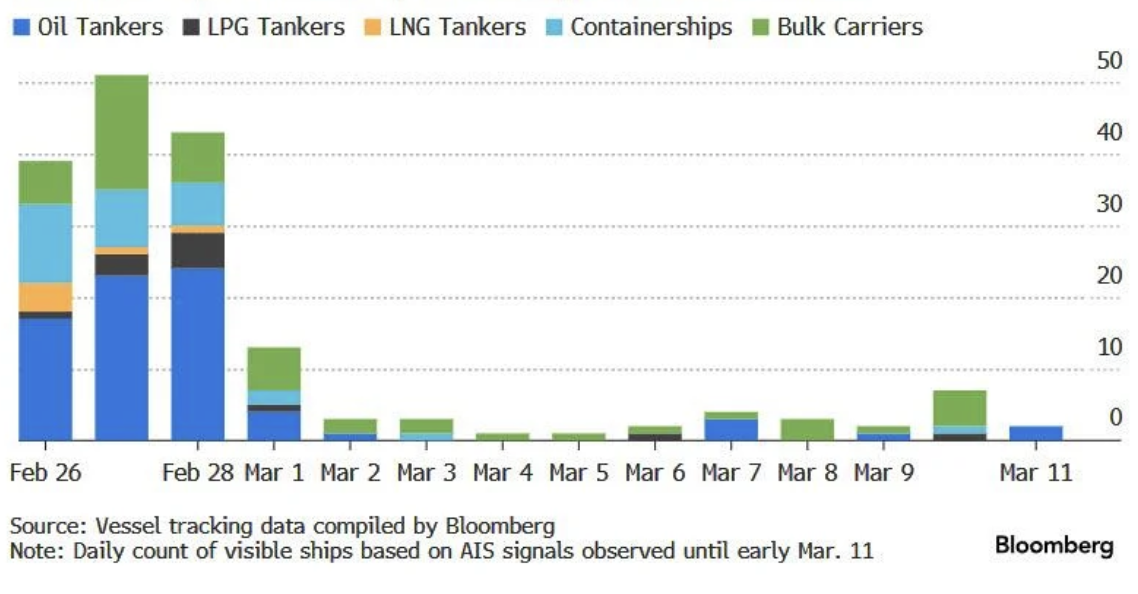
US and Israeli forces launched strikes on Iranian targets starting late February 2026, targeting missile sites, infrastructure, and leadership amid heightened tensions over Iran's nuclear program and regional proxies. President Trump described operations as "ahead of schedule," with Defense Secretary Pete Hegseth announcing the "most intense day of strikes" on March 10, though Iran has retaliated against Gulf states and US bases. Casualties have been increasing on both sides, and Trump has warned of an escalated response if Iran continues to disrupt oil flows via the Strait of Hormuz.
Strait of Hormuz Outbound Transits
Commercial ships seen transiting the waterway out of the Persian Gulf
Global Energy Market Effects
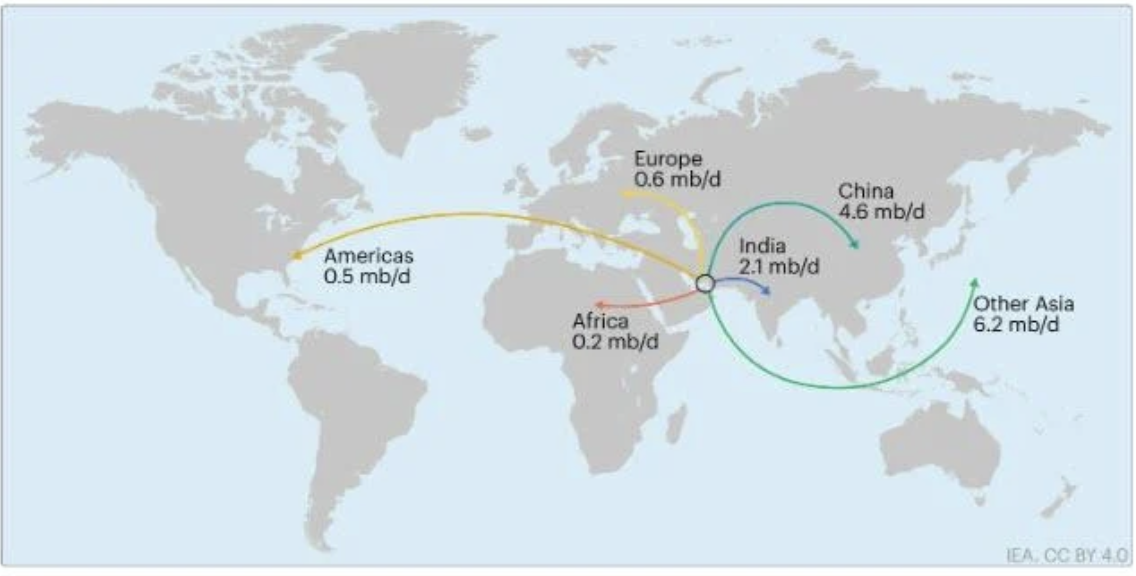
Oil prices surged early in the conflict, and in short order nearly doubled. Friday before the conflict started, WTI Crude was trading in the mid $60/bbl. Ten days later, as markets reopened on Sunday night, WTI Crude hit highs around $120 per barrel due to fears of prolonged Strait of Hormuz disruptions, through which approximately 18% of the world’s crude flows. The spread between April delivery oil and December delivery oil also exploded from appx. $2 to $42 per barrel.
Iran's threats on tankers and threats to block the strait have fueled supply shortage risks for crude, refined products like diesel and jet fuel, and LPG/propane. Availability of products is already starting to be an issue and will impact other markets as well. While prices dipped significantly in the last 48 hours on Trump's signals of a quick end, prolonged closure could, and will likely, sustain prices at $100+, pushing global inflation much higher.
Crude oil exports transiting the Strait of Hormuz by destination (2025)
Philippines Energy Dependence
The Philippines imports 95% of its crude oil and nearly all refined products from the Middle East, with 91% of LPG/propane also sourced there, leaving it highly vulnerable. It relies on coal (50-60% of power) and growing LNG imports (up 508% projected through 2029), both sensitive to global price spikes and potential coal demand shifts from LNG shortages. Domestic stocks offer a 30-60 day buffer, but regional refinery cuts exacerbate risks.
Impacts on Local Energy Prices
Higher fuel prices, combined with seasonal outages are pressuring Wholesale Electricity Spot Market (WESM) rates via higher generator costs. Inflation could climb 0.4-1.4 percentage points per $10/barrel oil increase, with WESM prices spiking further if outages tighten supply. Electricity and transport costs will rise most, indirectly hitting food via fertilizers and manufacturing.
Government Mitigation Steps
Manila has mandated energy-saving measures like, flexible work, and online meetings, while eyeing a four-day workweek and fuel subsidies for vulnerable sectors. Congress may grant emergency powers to suspend oil taxes, and apps allow "virtual fuel" pre-purchases to hedge volatility. The peso faces depreciation to 60+ vs USD if oil stays elevated, complicating imports.
LNG
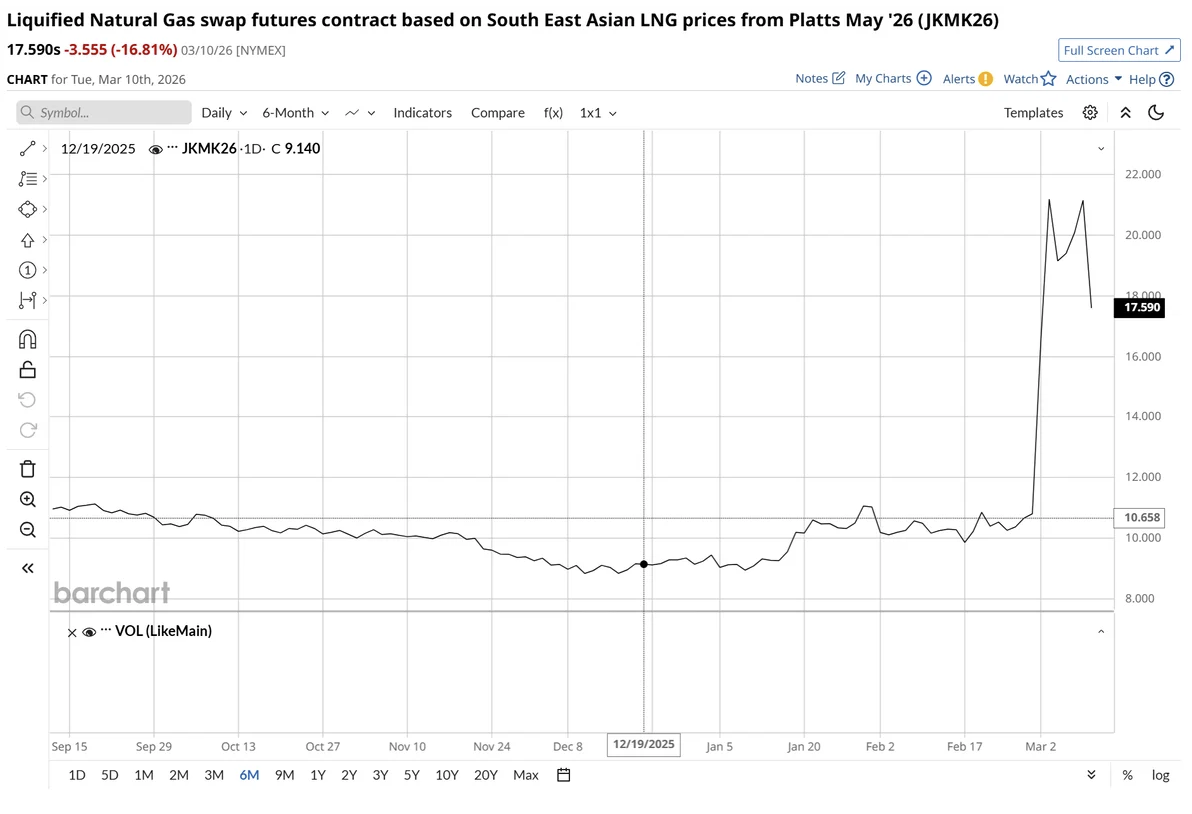
Qatar is one of the world’s key LNG exporters, and the US‑Iran conflict has disrupted those flows, tightening global gas balances and pushed more demand toward coal as a substitute fuel. With shipping lanes in and around the Gulf closed and buyers wary of transit risk, all Qatari cargoes are delayed until or not being tendered at all, cutting into spot availability just as oil and product prices spike.
Related Commodity Prices Move
As spot Natural Gas/LNG prices in Asia and Europe reprice sharply higher on reduced Qatari supply and heightened route risk, power utilities are reassessing generation stacks and fuel procurement strategies. Gas‑fired plants at the margin become uneconomic versus coal, especially in markets with spare coal capacity and more flexible emissions regimes, leading to incremental coal burn and stronger bid for seaborne thermal coal. This fuel‑switching dynamic reinforces the move already underway from the crude complex: tight LNG plus expensive oil creates a two‑pronged squeeze that channels additional demand into the coal market.
Coal as a Critical Backup
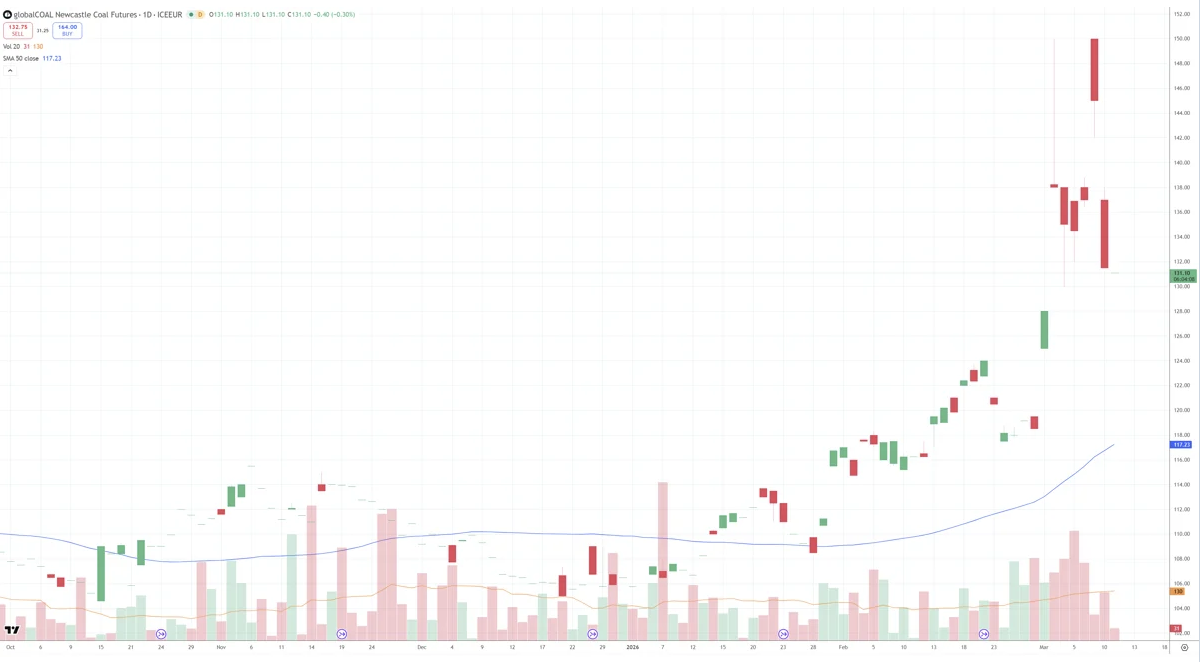
In this environment, coal is not just a cheap alternative; it is being repriced as a critical backup fuel that can be ramped when LNG cargoes do not arrive on schedule. Utilities, traders, and some governments are therefore rebuilding coal stockpiles and layering in hedges in Newcastle and Indonesian benchmarks, amplifying the rally that began in sympathy with crude and products.
Newcastle and Indonesian Coal Moves
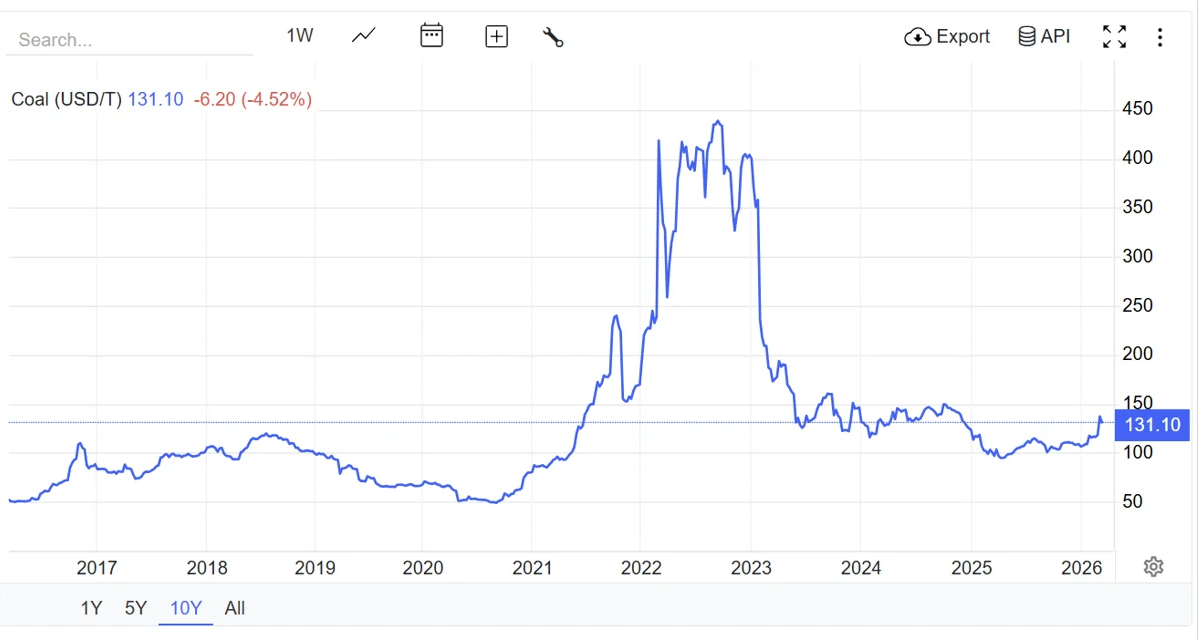
In our chart above, Newcastle thermal coal, the key Asia‑Pacific benchmark, was trading around $120/ton before the conflict and spiked to about $150/ton at the peak, its highest level in more than a year. It has since eased back, with last trades near $130/ton, still materially higher than pre‑war levels and tracking the elevated crude complex. Indonesian seaborne coal has followed a similar percentage move, with 4,200–4,300 GAR grades pushing up toward the high‑$50s per ton as buyers bid up lower‑rank supply.
Why Coal Is Trading in Sympathy With Oil
The war has driven oil toward multi‑month highs and pushed LNG spot prices sharply higher due to disruptions and risk premia around flows from the Gulf, particularly Qatar. Power utilities and industrials across Asia and Europe are responding by re‑evaluating generation stacks and, where possible, shifting marginal demand from expensive gas and oil back to coal, lifting thermal coal benchmarks. Even though coal itself is not physically constrained by the Strait of Hormuz, it is being repriced as a substitute fuel and as part of a broader “energy basket” where all molecules now carry a geopolitical premium.
Market Structure and Positioning
In derivatives, the rally has been concentrated in higher‑quality Newcastle and South African indices, where liquidity and hedging demand are deepest, while lower‑CV Indonesian material has been pulled higher but remains more supply‑sensitive. Financial players who were short coal as a structural de‑carbonization trade have been forced to cover as crude and products broke higher, adding momentum to the move. The net result is a classic correlated energy rally: oil leads on direct supply shock, gas and LNG overshoot on route and infrastructure risk, and coal is dragged higher both as a hedge and as the marginal back‑up fuel.
What does this mean for Philippines Electricity Prices?
For Philippines electricity prices, the key point is that the recent rally in coal is taking us back to roughly the same coal cost environment seen in 2024, not to completely new territory. With Newcastle and key ASEAN coal benchmarks trading around levels last seen in 2024, it is reasonable to think that, if fuel costs remain in this band and the system avoids prolonged large outages, average Luzon spot prices could gravitate back toward something like the 2024 full‑year level of about ₱5.1/kWh rather than a structurally higher regime. That view is also consistent with IEMOP’s preliminary simulations, which flag upside from higher global fuel but do not, by themselves, imply a break to unprecedented WESM averages absent additional supply stress.
What has changed since 2024 is the supply stack: there is now more renewable generation on the system, and that is already showing up in softer prices, especially in hours when solar output is strongest. Additional RE, particularly solar, tends to push down midday prices and, by extension, compress baseload averages, because more zero‑marginal‑cost energy clears ahead of coal and gas in those intervals. This helps explain why, despite the geopolitical headlines and higher fuel curves, the spot market reaction has been fairly muted so far, with only a modest pop in WESM prices about a week ago that market operators attribute mainly to plant outages and localized supply tightness rather than to fuel costs alone. Put together, higher coal narrows the downside for Luzon prices versus 2025 lows, but the larger RE fleet and currently comfortable supply margins argue that any move back toward ~₱5.1/kWh is more likely a ceiling scenario than the new floor.
The views contained in this newsletter are my own opinion and should not be considered investment advice or relied upon to make investment decisions. Disclaimer.
